
Alumni Spotlight: Joshua Kery
Software Developer at RLMG
By Sarah Elizabeth Bender
Classes within the Integrative Design, Arts, and Technology (IDeATe) network at Carnegie Mellon do more than train students in a specific art or technology — they connect diverse strengths across the university to encourage interdisciplinary collaboration and new ways of problem-solving. We checked in with 2020 College of Fine Arts graduate Joshua Kery, who took IDeATe Assistant Dean for Curriculum Marti Louw’s Learning in Museums IDeATe course, to see how his experience from IDeATe has helped him in his post-graduation achievements.
Q: Tell us a bit about what you’re doing with your life now that you’ve graduated from CMU. Where are you now? Is there a project you’re working on?
A: For just over five years now I’ve been programming interactive media for museums — starting as a freelancer and moving to full-time last year. I work for RLMG, a digital experience design firm focused on making work for museums and public spaces. In my role I develop small games, informational touchscreen kiosks, and other interactive experiences for museum visitors. Our work is very collaborative, often on small teams. I’m always leveraging my background in the School of Art and my HCI minor as I work alongside our designers and producers to help ideate, prototype, and test our software.
Recently I finished a game about solar power for ComEd’s Smart Energy Hub, a learning center for school field trips in Chicago to learn about electricity. I got to influence a good amount of the design of our game, and I built it using the Unity game engine.
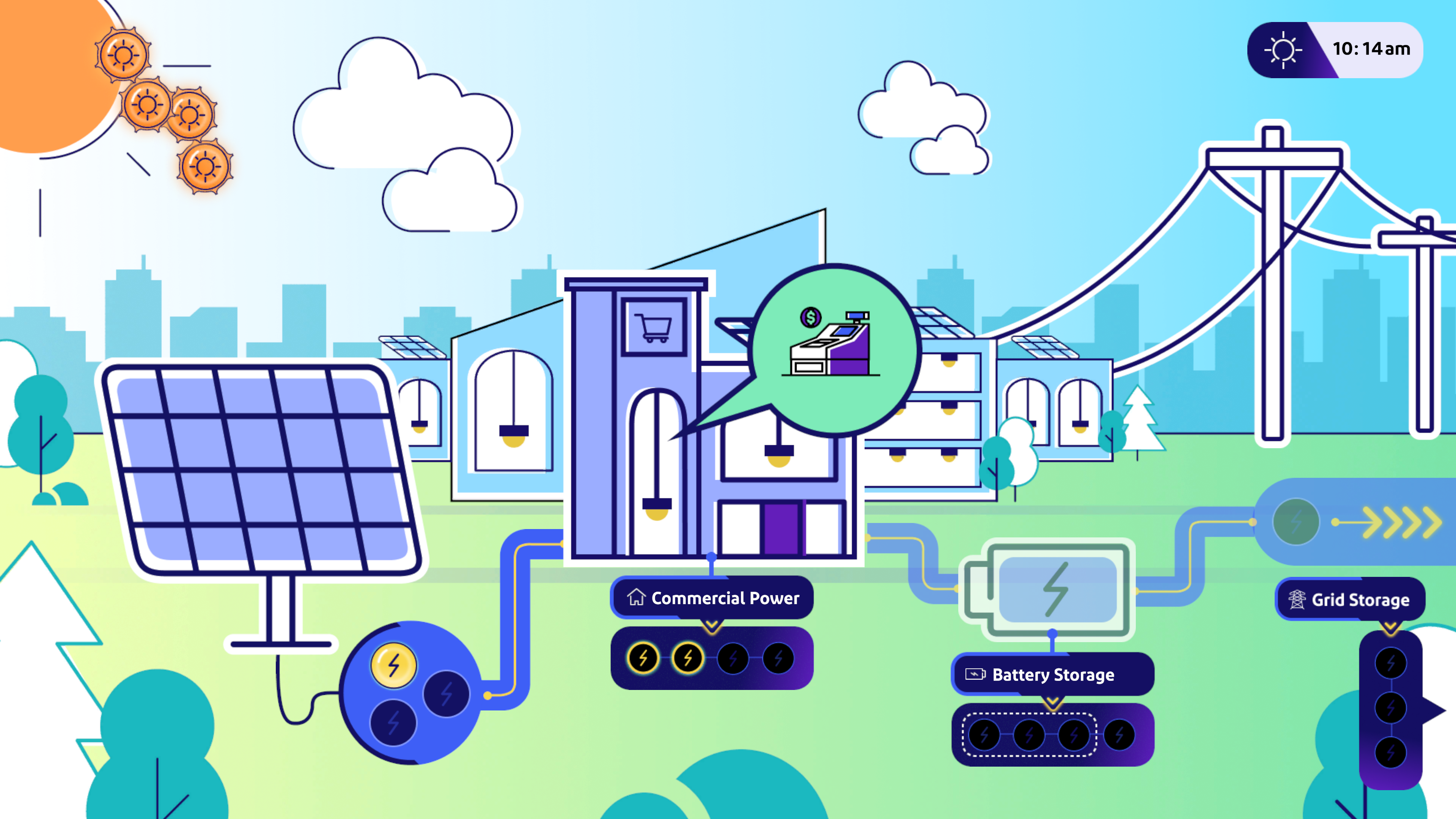
The best part about this project was the playtest sessions we hosted in our office. I really enjoyed the challenge of problem solving with my team when our playtesters were frustrated or confused with our game design. In general, the times when I get to see people interact with the software I create are some of the most rewarding moments in my job. They show me the impact my work is having in the world, whether it’s helping folks imagine a solar-powered future, or shaping any other way they see themselves in relation to art or history or nature.
Q: Can you share an experience from an IDeATe class at CMU that has stuck with you? Why did it make such a strong impression?
A: Marti Louw’s Learning in Museums class in my senior spring was a pivotal moment for me. When I registered for the class that prior fall, I felt very uncertain about my future after graduation. I had an interest in museums that led me to take the class (and I had also worked at the Children’s Museum of Pittsburgh that summer). But it was the class’s content that gave me a clearer sense of the future. Through the course, I saw museums as places where I could combine my love for art and design and the design-thinking approach I learned from HCI into something that felt approachable and aligned with the kind of positive, measurable impact I wanted my work to have.
Specifically, the time in class we spent at the Carnegie Museum of Natural History strongly shaped my interest in exhibit design. For class we conducted our own evaluation studies of the exhibits at CMNH. For the first time, I paid close attention to how visitors moved through an exhibit hall. We learned about the museum’s rural and urban outreach programs around human impact on the environment, and we designed our own experiences to teach about similar topics on the exhibit floor — in my group’s case, plastic waste management. I didn’t get enough chances in Art or HCI alone to observe or create meaningful audience impacts like this. Since taking the class, I’ve really valued the testing and evaluation components of exhibit design, especially when they help exhibits about social and environmental justice better communicate their ideas.
Q: How do you think IDeATe helped to prepare you for your role today? What skills from IDeATe are you using as you advance your career?
A: If I haven’t made it clear by now, I’ll say that IDeATe asked me to apply a creative design process that I had learned over the course of my time at CMU to a kind of work that I really cared about. My classes took the skills I’d begun to cultivate elsewhere — giving and soliciting feedback, moving through the steps of design thinking, expressing my ideas through written and visual artifacts — and gave me a sense of how they can come together in a specific field.
Besides that, I’d say working on group projects in IDeATe classes has stuck with me. In class, the projects were big enough that I had to practice trusting my peers with different pieces. Now, every project I work on has a different mix of coworkers, contractors, and clients collaborating on a common set of products, and I still think back to those group projects when I’m wondering how to adjust to a new group dynamic, how I can rely on my colleagues, and how I can support them.
I’ll also add here that Marti Louw helped me find my current job by happenstance. I was on a run in Frick Park post-graduation when I crossed paths with her, and in a brief conversation about finding work she suggested I search through the lists of conferences and awards in the museum and exhibit design industry for companies that interested me. I cold-emailed a bunch of companies from one of those lists, and I’m working for one that got back to me.
Q: What would you say to a student considering whether to enroll in an IDeATe class at CMU?
A: Go for it! An IDeATe class might feel separate from your regular course of study, but you’ll find that the classes value your knowledge from your other disciplines and that they let you reflect and reimagine how your expertise can apply to a different field. This different view on your studies can come at any point in your degree, whether it inspires your later interests or helps you make sense of what you’ve learned so far.