Learning About Learning
Students move from principles to prototypes in hands-on IDeATe class
By Sarah Elizabeth Bender
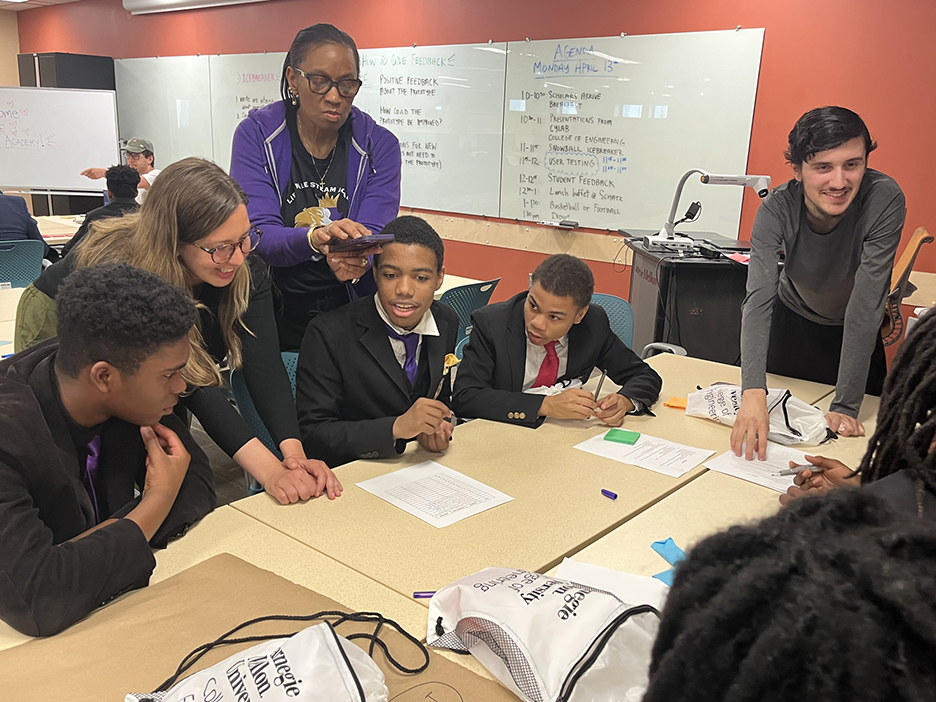
It’s a Monday morning in Hunt Library, and IDeATe Studio B is filled with the voices of middle school students. Dice clatter across tables as small groups lean in, testing strategies, solving problems, and trying to figure out how the games in front of them actually work.
College students stand at the front of the room, walking their young guests through the steps of their handmade games. They’re part of IDeATe’s Learning About Learning course, and they’re testing educational activities they designed and built using IDeATe’s collaborative makerspaces throughout the semester.
The Science of Learning
For instructor Erin Gatz, Learning About Learning is an opportunity to introduce students to the science of learning, including how people learn, what shapes that process, and how to design more effective learning experiences. Early on, she covers foundational concepts and methodologies that explain how people absorb information, including scaffolding, project-based learning, and cognitive apprenticeship.
Gatz, from the Human-Computer Interaction Institute (HCII), is the Head of Partnerships for PLUS – Personalized Learning Squared, a human-computer tutoring program at Carnegie Mellon University that aims to double math learning for K-12 students. She has a Ph.D. in Learning Sciences and Policy from the University of Pittsburgh School of Education and she teaches in IDeATe’s Design for Learning minor, which is offered in partnership with HCII.
Students in Design for Learning classes like Learning About Learning bring together a variety of skills to imagine, design, iterate, and evaluate effective new media systems for learning, which can range from games to adaptive ed-tech and augmented reality experiences. Some students pursue the minor, while others explore a class or two.
First-year Helen Fu, a student in the Information Systems program offered through Dietrich and Heinz colleges, came into CMU knowing she wanted to minor in Design for Learning. Learning About Learning is a requirement for the minor, and a natural entry point into the field.
“I’ve always been interested in edtech and education, as well as products that help support education,” she explained. “This class does an excellent job of walking us through the science of how to learn.”
Dietrich College senior Jay Dasilva enrolled in the class to fill a requirement for his professional writing major. The title caught his attention, and he soon found himself drawn into the subject as well.
“I like the idea of looking into what underlies a seemingly simple concept like learning,” he said. “It’s so often overlooked, even as it’s happening to us. It’s been really fascinating to dive deeper into what goes into creating a learning experience.”
Learning in Action
In class, Gatz covers theories about learning, and also gives students opportunities to present course material. But that’s only part of the curriculum. Between presentations, lectures, and guest speakers, her class spends time each week in IDeATe’s Fabrication Lab, working on prototypes that they build from scratch, test with various users, and then revise.
The Fabrication Lab, located in the basement of Hunt Library, includes tools like a drill press, sewing machines, laser cutters, and 3D printers, along with a wide range of materials for building and experimentation.
“Nobody in the class had ever 3D printed or laser-cut anything before,” Gatz said. “The hands-on element is something that students really appreciate, and it’s amazing to see how exposure to these tools inspires such a range of creative projects.”
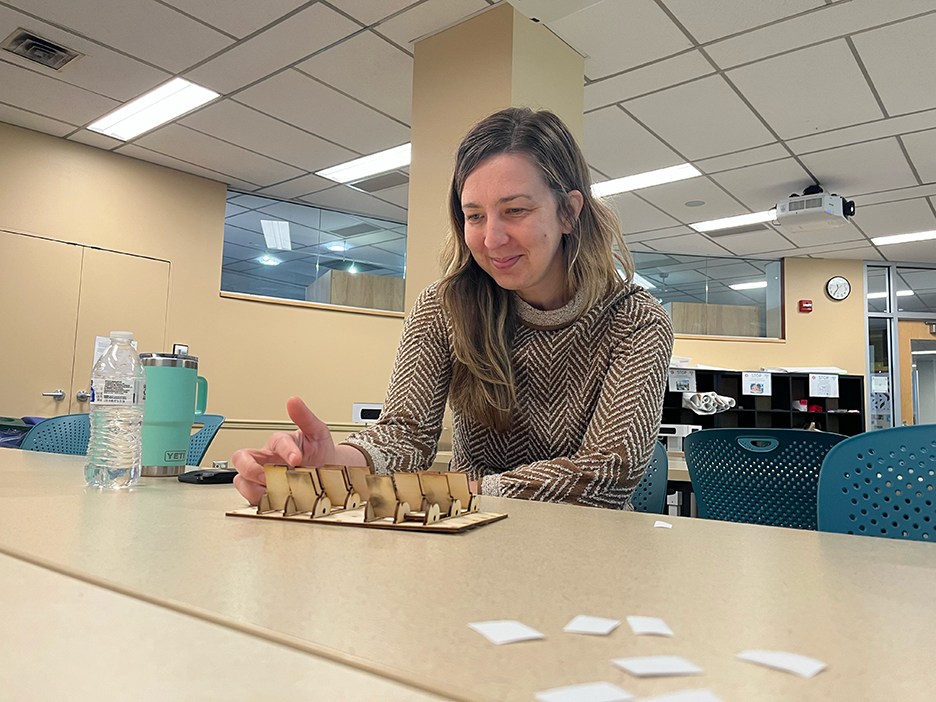
For Fu’s project, she wanted to create a game similar to “Guess Who?” but focused on emotional regulation strategies. She devised a set of strategy cards that prompt players to identify and manage emotions through a series of yes-or-no questions, turning abstract concepts into something interactive and approachable. When it came time to use the makerspace, she laser-cut a detailed, interactive game board modeled after the familiar format of the game.
The other students also enjoyed the chance to experiment with equipment and bring their ideas to life. “It’s been incredible being able to access the makerspaces and work on prototypes,” said Dietrich College senior Dan Lehavi, who is majoring in philosophy and taking an IDeATe class for the first time.
Field Testing
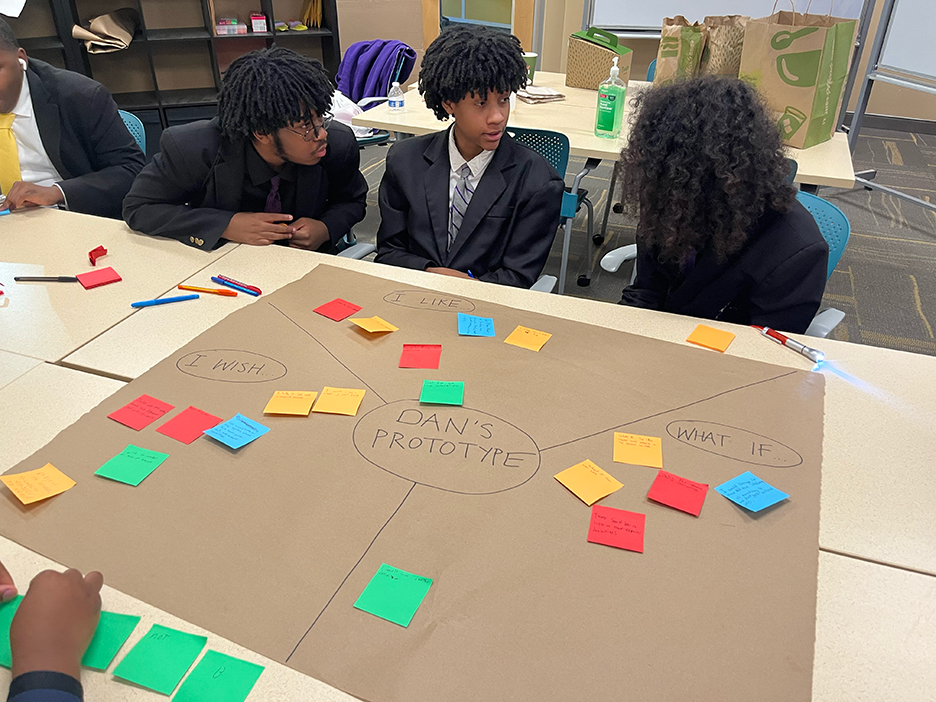
By the time the middle schoolers from LIFE Male STEAM Academy joined them in Hunt Library, the students in Learning About Learning were ready to put their ideas in front of real learners.
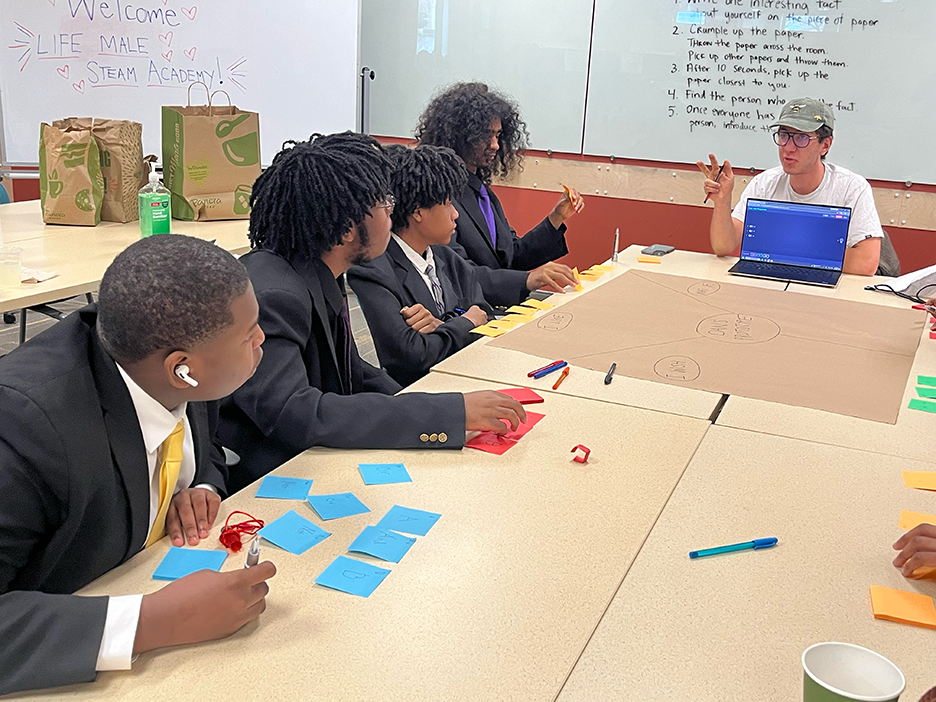
Lehavi gathered a group around his laptop, walking the students through a metaphor that compared building a computer to turning a light switch on and off. He introduced them to AND, OR, and NOT, fundamental logical operators in computer science. Then, he challenged them to figure out how various light switches were wired based on how they behaved.
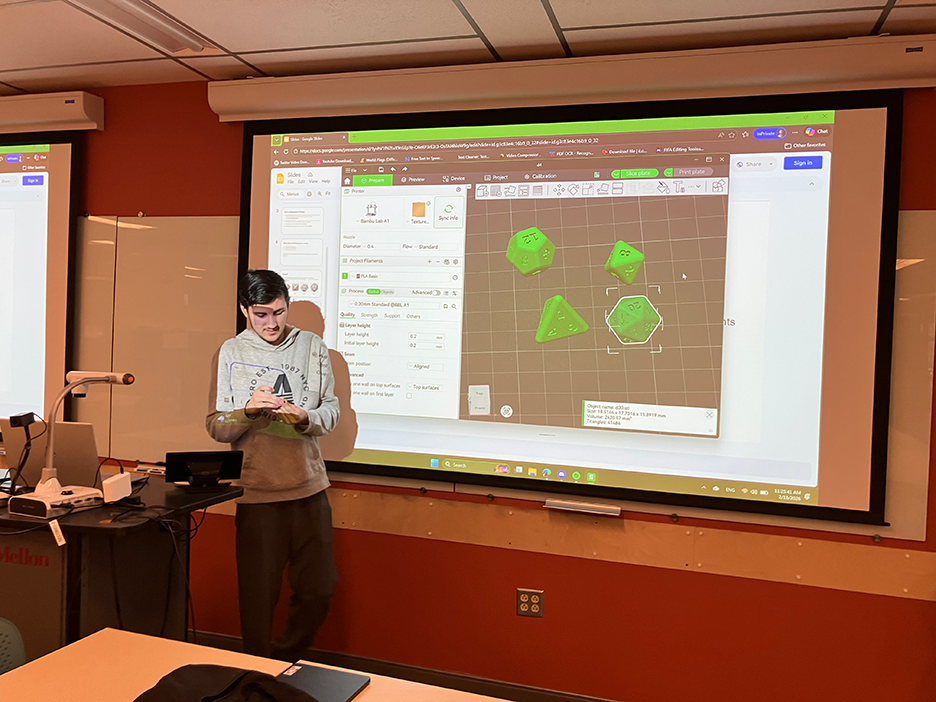
Dasilva’s group was given sets of carefully-made 3D-printed dice, learning the rules as they played. They rolled two dice at a time, using simple math operations like addition, subtraction, multiplication, and division to reach a total of 27.
As the students played, Dasilva and his classmates observed carefully, gathering feedback and refining their designs in real time. Through testing, iteration, and experimentation, their ideas had evolved throughout the semester into learning experiences shaped by the people using them.
For Gatz, that process is the point. “Students don’t just learn about theory here,” she said. “They apply it, test it, and see what actually works for real learners. That kind of experience sticks with them.”
For CMU students curious about education, design, or how people learn, Learning About Learning offers something common at IDeATe: the chance to turn ideas into something tangible and see what happens when they meet the real world. Students from any major are invited to enroll in the course and explore the Design for Learning minor.